
Eastbourne is experiencing a solar boom. Based on the national trend an estimated 700 to 1,000 more households have installed rooftop solar panels during 2026, taking the total to around 8,000 homes. The growth has made 2026 one of the strongest years ever for domestic solar installations.
Anyone who currently has solar panels in Eastbourne may have found that July 2026 has been their highest solar output, for any month, ever. ‘Wall to wall’ sunshine, for the month, has meant some customers will be exporting enough this summer, to cover their annual electricity and gas bills for the year. Or to look at it another way, Eastbourne’s domestic solar panels produced enough electricity in July to power more than half the town’s homes.
For July 2026, a reasonable estimate is that domestic rooftop solar in Eastbourne generated around 5.3 million kWh. Although each home only has a limited number of panels it is when you add them all up you can see the true overall effect.
And it is not just homes but businesses, hospitals and care homes. With energy prices continuing to place pressure on healthcare and care providers, investments in renewable energy are proving to be both environmentally and financially beneficial. Every unit of electricity generated on-site helps shields the home from fluctuations in wholesale energy prices.
Maris View is a new local care home, with the roofs covered in 380 solar panels and they also have heat pumps. They unusually have half of them facing north and that helps capture even more sun.
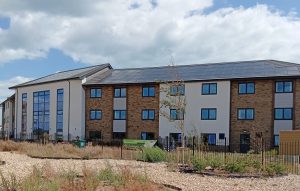
Modern care homes operate around the clock, making them particularly well suited to using electricity generated during daylight hours, especially during the busy summer months. This type of installation shows that large rooftop solar systems are capable of making a meaningful contribution to local energy supplies. Based on my, and ChatGPT’s calculations, the care home’s solar panels for July, possibly produced enough electricity (20,000 kWh) to meet the average daily needs of 100 homes, while reducing carbon emissions compared with grid electricity.
An even larger scheme is the solar panels on the car park at Easbourne DGH. With well over 2,000 solar panels it probably generated around 125,000 kWh for July.
If you think solar would benefit you, then now is the time to investigate.
[ From a letter submitted to Sussex World by Paul Humphreys EEAN]