
If you’ve lived in Eastbourne for a while, you’ll remember when a rustle in the hedge at dusk was nothing unusual — a hedgehog snuffling about on its nightly rounds. These days, that rustle is rarer, and it’s worth asking why, and what we can each do about it.
Britain’s hedgehogs have had a rough few decades. Fences without gaps, tidier gardens, busier roads and fewer wild corners have all chipped away at the space hedgehogs need to survive. A single hedgehog can roam a mile or more in one night looking for food, shelter and a mate — so even a well-loved, wildlife-friendly garden isn’t much use to them if it’s sealed off like a fortress. The good news is that a handful of small, practical changes across our streets can add up to something genuinely useful for the local population. Here’s where to start.

1. Open up a hedgehog highway
This is the single most effective thing any of us can do. Cut, drill or dig a 13cm x 13cm gap at the base of your garden fence or wall, and you’ve created a hedgehog highway — a doorway between your garden and the next. Do it along a whole street and you’ve created a proper corridor, letting hedgehogs move safely between gardens without crossing roads or getting trapped in a single small patch.
A few tips:
- If the fence isn’t yours, or it’s shared with a neighbour, have a friendly word first — most people are only too happy to help once they know why.
- Position the gap near a hedge, border or bit of planting where a hedgehog will feel safe darting through, rather than out in the open.
- Log your highway on the Big Hedgehog Map once it’s done — it helps researchers understand where corridors are forming.
If you fancy making a group project of it, a whole road linking gardens together is exactly the kind of thing that could earn Eastbourne a mention in Hedgehog Street’s “Biggest Hedgehog Street” efforts.
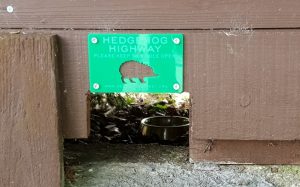
A 13cm x 13cm gap at the base of a fence is all it takes to open up a hedgehog highway.
2. Leave a bit of “mess”
Hedgehogs love exactly the sort of garden corner that used to earn a telling-off from a house-proud neighbour: log piles, leaf litter, a patch of long grass, an untidy hedge base. These spots shelter the beetles, worms and slugs that make up a hedgehog’s natural diet, and they double as nesting and hibernation sites over winter. You don’t need to abandon the whole garden to wilderness — even a modest pile of logs and leaves tucked in a corner makes a real difference.
3. Water, always
A shallow dish of fresh water, topped up regularly, is a lifeline — especially in dry spells or hot weather. Add a few pebbles or a small ramp so that anything that falls in, hedgehog or otherwise, can climb back out. Never leave out milk, which hedgehogs can’t digest properly; plain water is what they need.

A shallow dish, topped up regularly and with a few pebbles for safe footing, can be a lifeline in dry weather.
4. Check before you strim, mow or light a bonfire
This one’s simple but really matters. Hedgehogs curl up in long grass, under hedges, in leaf piles and inside stacked bonfire material — and they don’t run when disturbed, they freeze. Before strimming, mowing near borders, or lighting a bonfire that’s been sitting for a few days, give it a gentle check and a poke with a stick from a distance. It takes thirty seconds and can prevent a horrible accident.
5. Skip the slug pellets
Chemical slug pellets don’t just kill slugs — they poison the creatures that eat them, hedgehogs included, and they also remove a food source hedgehogs rely on. Wildlife-friendly alternatives like copper tape, beer traps, or simply tolerating a bit of slug damage are kinder to the whole garden ecosystem.
6. Think twice about netting and drains
Loose garden netting, especially low to the ground around fruit or vegetable patches, is a common cause of hedgehogs getting tangled and injured. Keep it taut and raised where you can, and check it regularly. It’s also worth covering steep-sided drains, gulleys or ponds, or adding a ramp of stones or wood, so a hedgehog that falls in can climb back out rather than drown.
7. If you find a hedgehog that needs help
Signs to watch for include a hedgehog out and about in daylight, one that’s wobbly, very thin, or curled up and unresponsive when approached. If you spot any of these, contact a local hedgehog rescue or the British Hedgehog Preservation Society on 01584 890801 for first-aid advice before doing anything else — well-meaning intervention can sometimes do more harm than good if it’s not done correctly.
Further reading and getting involved
- British Hedgehog Preservation Society — advice, rescue contacts and hedgehog first aid
- Hedgehog Street — become a Hedgehog Champion and get free highway signs and resources
- Big Hedgehog Map — log your hedgehog sightings and highways
- National Hedgehog Monitoring Programme — help classify trail-camera images from home
None of this requires a grand gesture. A gap in a fence, a log pile left alone, a dish of water kept topped up — multiplied across enough Eastbourne gardens, that’s a genuine corridor of safe habitat stretching across town. If you do open up a highway or spot a hedgehog on your travels, we’d love to hear about it — drop us a note for the next newsletter.
Here’s to more rustling in the hedges this summer.
Image credits: Vecteezy, Sean Hill, British Hedgehog Preservation Society/Ian Harris