
Introduction
With winter approaching, households across East Sussex are once again looking at ways to keep warm as energy bills consume most of the family budget. Residents will have noticed that the price cap is going up again. Sometimes costs are removed and moved into general taxation and at times more gets added, for example it will soon include a new £7 a year surcharge to subsidise hydrogen. The good news is that there are more options for residents than just turning the thermostat down.
One of the simplest ways to reduce costs is to think about when electricity is being used. Households on variable tariffs may be able to save money by moving some electricity consumption away from peak periods. Dishwashers, washing machines, immersion heaters and electric vehicle charging can sometimes be scheduled for cheaper periods, although consumers should check the precise terms of their tariff. There is now a growing range of technology, such as smart meters, that can help households make better use of their gas and electricity. There are even some Tariffs, such as Agile Octopus, that pay you to use power, when there is too much across the National Grid
Start with the basics
Your first step should be to look round your home. Loft insulation and cavity-wall insulation can be among the most effective ways of reducing heat loss. A warmer home requires less energy to maintain a comfortable temperature, and insulation can reduce bills. Sometimes curtains or draught excluders will help. Think also about whether gas or electric heating is cheaper to use at certain times of the day.
For homeowners considering renewable energy, solar panels combined with a home battery can go a huge step further. Instead of sending surplus electricity back to the grid, a battery can store some of it for use later when the sun is no longer shining. Electricity bills for a typical family home can be slashed by perhaps £1000 a year.
To help out Wealden District Council facilitates cheaper solar panel contracts, through the Solar Together group-buying scheme . Unfortunately you should be aware that those in blocks of flats may not be allowed to install these products
EEAN is currently supporting a community energy cooperative, BHESCo, with promoting a fully-funded community solar and battery storage scheme for Langney residents, who would receive the equipment at no upfront cost and would therefore be able to reduce their energy bills from day one. This scheme could eventually be rolled out across all of Eastbourne. Please share details of this scheme in your own local networks, if you can, as it is still not too late to register.
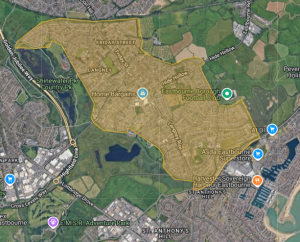
Langney Area for Solar .
https://bhesco.co.uk/community/just-transition-programme/eastbourne
https://bhesco.co.uk/community/community-solar-power
As a cheaper new alternative there are plug-in solar options, with some products costing less than £600. These can potentially help offset a portion of the electricity, used by the home’s “background” devices. These include the fridge, broadband router, television and other appliances that remain on for much of the day.
There is help available
Households struggling with energy costs should not assume that they have to tackle the problem alone. In East Sussex, free local advice is available through Energise Sussex Coast, which provides advice on energy efficiency, bills and ways of reducing household energy costs. The Warm Home Check service also offers support to eligible households, including advice intended to help people stay warm and safe during the winter. These services can also help people who might qualify for grants or part-funded improvements, potentially including insulation, solar panels or heat-pumps.
Older residents should also investigate the support to which they are entitled. Eligible pensioners in the UK can receive between £100 and £300 through the Winter Fuel Payment, with payments made automatically to those who qualify under the current rules. Age UK East Sussex provides information and advice for older residents, including guidance on energy bills and entitlements.
If a household is in energy debt for either gas or electricity , the supplier (such as Ovo, Octopus and British Gas) , may consider them as a ‘priority’ customer and provide additional support. Anyone struggling to pay should contact their supplier rather than allowing arrears to build up. There may be repayment arrangements, support schemes or other assistance available.
Next Steps
The practical steps are clear: reduce the amount of energy your home needs, use electricity when it is cheapest, generate and store some of your own energy if it makes financial sense, and find out what assistance is available before paying the full cost yourself. For Eastbourne residents, good local advice may be the cheapest investment a household can make. Regardless of what you do, try and keep warm this winter!
Based in an article published in Bournefree –
https://bournefreelive.co.uk/saving-on-heating-this-winter-by-paul-humphreys-willingdon